
The car world is changing fast. Cars are becoming like smart computers on wheels. They work better with code than old parts. This is the start of a new way to move around in the United States.
By 2028, cars will change how we travel. They will have cool connected vehicle features. This means cars will get better with digital updates. This guide will help you understand these changes.
We will look at eight ways to get ready for this change. We’ll talk about costs, safety, and keeping your data safe. Knowing about connected vehicle features is key for smart buyers in the future.
Key Takeaways
- Cars are shifting from mechanical hardware to software-centric computing platforms.
- The 2026-2028 period will see rapid adoption of digital-first automotive technology.
- Connectivity will play a central role in vehicle safety and performance updates.
- Consumers must prioritize data privacy as cars become more integrated with personal networks.
- Total cost of ownership will change due to subscription-based software models.
- Informed purchasing decisions require evaluating both hardware reliability and software support.
Why Software-Defined Vehicles Will Reshape Driving by 2028
By 2028, driving will change a lot. It will be more about code than metal parts. Our cars will keep getting better even after we buy them.
Connect the shift from fixed-function cars to continuously updated vehicles
For a long time, cars didn’t change much after we bought them. They stayed the same until they were old.
Now, Software-Defined Vehicles are changing that. These cars can get updates online. This lets makers make them better, add new things, and fix problems without us doing anything.
Identify the changes drivers will notice in features, performance, and ownership
Soon, we’ll see big changes in how we use our cars. They will learn our habits and change to fit us better.
Our cars will get better over time. They can even change how far they go on one charge. And we won’t have to buy new things to get new features. We can just pay for them online.
| Feature Category | Fixed-Function Cars | Software-Defined Vehicle |
|---|---|---|
| Updates | Manual/Dealer Visit | Over-the-Air (OTA) |
| Performance | Static/Fixed | Dynamic Optimization |
| Features | Hardware-Locked | Software-Enabled |
| Ownership | One-time Purchase | Subscription/Unlockable |
Separate realistic developments from speculative promises
We need to be careful about what we believe. Some say cars will drive themselves soon. But we should know the difference between small steps and big changes.
Right now, software-defined vehicle tech is making driving safer and more comfy. By 2028, we’ll see better routes and cars that use less energy. But we won’t have cars driving themselves everywhere.
How Software-Defined Vehicles Work Beneath the Surface
Today’s cars have a complex digital world inside. We’re moving to a single, programmable platform for the whole vehicle.
Map the vehicle’s sensors, electronic control units, and central computing platforms
Old cars had many small controllers. Now, we have centralized computing. A big processor handles data from cameras and sensors.
This change makes cars faster and simpler. The central hub lets the car make quick decisions. This was hard with many small units.
Explain the role of operating systems, middleware, and application software
A strong vehicle operating system is key. It keeps the car running smoothly. It handles hardware well, no matter the driving.
Middleware connects the operating system to apps. It makes sensor data useful. This way, different features work well together.
Show how cloud services, connectivity, and over-the-air updates work together
Connectivity links the car to the maker’s servers. Over-the-air updates bring new features or fixes. This happens while the car is parked.
“The future of the automotive industry is not just about the metal; it is about the code that breathes life into the machine.” — Industry Analyst
Cloud services keep a lot of data. This helps makers know when to fix things before they break. Our cars stay updated and safe.
Distinguish safety-critical controls from convenience and entertainment features
Not all software is the same. We need to know which is safe and which is just fun.
| Feature Category | Primary Function | Update Frequency | Safety Priority |
|---|---|---|---|
| Safety-Critical | Braking, Steering, Propulsion | Low (Rigorous Testing) | Highest |
| Convenience | Climate, Seat Adjustment | Moderate | Medium |
| Entertainment | Media, Navigation, Apps | High (Frequent) | Low |
Safety-critical functions are kept separate. This stops problems in the fun stuff from affecting safety. Our digital world and safety are always connected.
Step 1: Establish a Baseline for Today’s Connected Car
Many of us drive cars today with cool digital stuff inside. Before we look ahead, we need to know what connected vehicle features our cars have now. Knowing these features helps us see how driving will change in the future.
List the software capabilities already available in vehicles sold in the United States
Today’s cars in the U.S. are like smart phones on wheels. They come with cool stuff like real-time traffic info, weather updates, and online maps. We can use touchscreens and voice commands to talk to our cars.
Check whether the vehicle supports over-the-air updates and remote diagnostics
Getting over-the-air updates is a big deal for car makers. We should check if our car can get updates without going to the dealer. Also, remote diagnostics help catch problems early, saving us money.
Review subscription services, smartphone integration, and connected-account requirements
Many cars need a digital account to work fully. Cool connected vehicle features like remote start need a subscription. Plus, phones like Apple CarPlay or Android Auto are expected to work well with our cars.
Record current limitations involving cellular coverage, data plans, and hardware
Even with all the tech, there are limits. Some features need good cell service, which can be hard to find in some places. Also, even with over-the-air updates, old hardware might not support new software.
Step 2: Evaluate the Hardware That Enables Software-Defined Vehicles
The real power of our cars lies in their hardware, not just the screens. The car’s ability to do things depends on its electronic parts. Knowing this helps us not get upset when a feature is not available.
Assess centralized computing and zonal electrical architectures
Today’s cars are moving to one big computer instead of many small ones. This centralized computing makes the car smarter and easier to update.
A zonal architecture also helps. It groups car parts by where they are, not what they do. This makes the car lighter and easier to fix and update.
Examine sensors for driver assistance, automation, and cabin monitoring
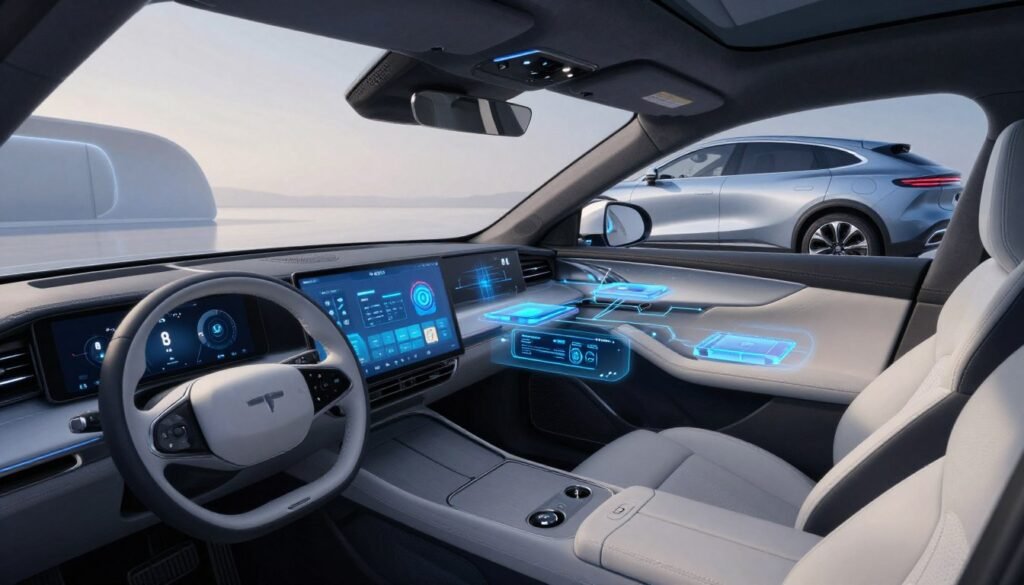
Our car’s software needs good data from the road and inside. We need to check if it has the right cameras and sensors. These are the car’s eyes and ears.
Inside, sensors watch us and make sure we’re comfortable. They adjust things like temperature and music. Without these, no software can make these changes.
Determine which features require dedicated hardware before software activation
Not every feature can be turned on with a software update. Some need dedicated hardware like fast processors or special sensors. We should check if our car has this before trying to turn on features.
Compare practical examples from Tesla, Mercedes-Benz, Ford, General Motors, and Rivian
Car makers are at different levels in using new tech. Tesla has been leading in making cars smarter over time. Mercedes-Benz and Rivian are also focusing on fast computers.
Ford and General Motors are quickly changing their old cars to new tech. But, their older cars might not be able to get the latest updates.
Identify why older electronic architectures may restrict future upgrades
Older cars have many small computers, not one big one. This makes it hard to update them with new features. They can’t talk well to each other.
Old cars might not get the same updates as new ones. Choosing a car with modern tech means it will stay up-to-date with new tech.
Step 3: Prepare for the Major Changes Expected in 2026
2026 is a big year for cars and how we talk to them. Cars will get smarter and make driving safer and easier. It’s important for drivers to know about these changes.
Track improvements in advanced driver-assistance systems and automated parking
Advanced driver-assistance systems will get better at helping us drive. They will use better sensors to handle traffic better. Automated parking will also get better, making it easier to park without help.
Evaluate smarter route planning, energy management, and charging coordination
Future cars will plan our trips better using real-time traffic info. They will use less energy, making long trips longer. Electric vehicle charging will also get better, making it faster to charge.
Watch for expanded cabin personalization and natural-language vehicle controls
Our cars will soon know us better, thanks to artificial intelligence. We’ll talk to our cars in a natural way. This means we can change settings without looking away from the road.
Verify the difference between hands-free assistance and legally autonomous driving
Hands-free assistance is not the same as driving on your own. Even with smart tech, we must be ready to take control. Only certain cars can drive on their own legally.
Check how regional regulations affect available features in the United States
What features your car can use depends on where you live. Laws in the U.S. vary, affecting car tech. Always check what’s allowed in your area to drive safely and legally.
Step 4: Plan for the Connected Vehicle Experience of 2027
By 2027, cars will be more than just a way to get around. They will connect our homes, phones, and energy systems. Our cars will be smart partners in our daily lives.
Prepare for software that coordinates the vehicle, home, phone, and charging network
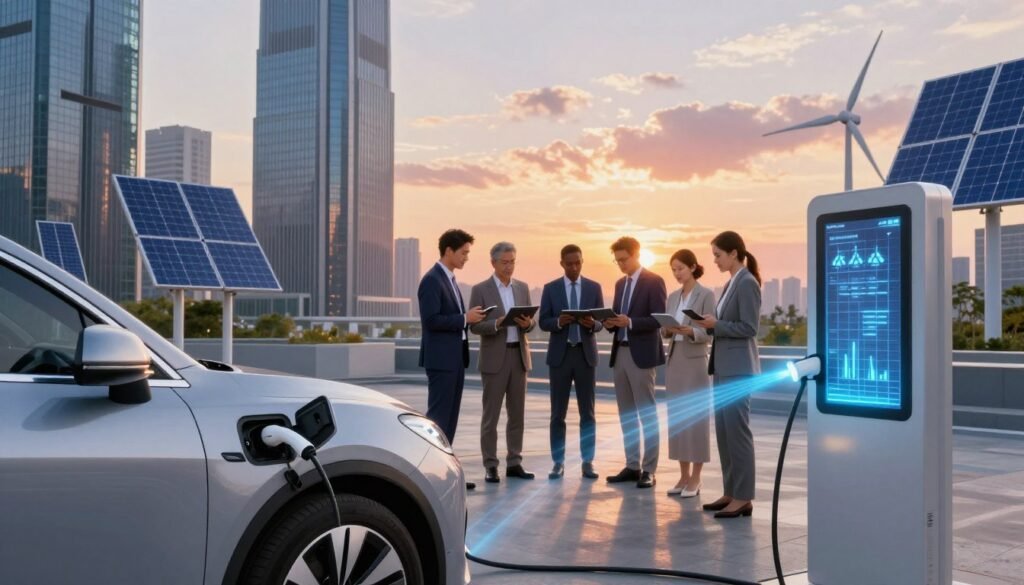
The future software will make everything work together smoothly. Our cars will match our schedules and control our homes. This makes life easier and more efficient.
Charging our electric cars will be easy and automatic. By 2027, cars will get power when it’s cheapest. This means we’ll always be ready to go without any hassle.
Assess vehicle-to-home and vehicle-to-grid capabilities for electric-car owners
Electric car owners will see their cars as power sources. Vehicle-to-grid tech lets cars send power back to the grid. This can even make money for us.
Our cars will also power our homes during outages. This makes our cars key to keeping our homes running smoothly.
Understand how predictive maintenance can reduce unexpected repairs
We’re moving to a world where cars fix problems before they happen. Predictive maintenance uses sensors to catch issues early. This keeps us from being stuck on the road.
The true value of the software-defined vehicle lies in its ability to anticipate the needs of the driver before they even arise.
Review battery-health data, charging recommendations, and warranty implications
Keeping our car batteries healthy is important. We need to watch our car’s health reports and follow charging tips. This helps our batteries last longer.
It’s also key to know how our car habits affect our warranties. Car makers might tie warranties to how we charge and update our cars.
Consider interoperability with Apple CarPlay, Android Auto, and smart-home platforms
Apple CarPlay and Android Auto will do more than just show our screens. They will control our cars and connect with our homes. We should look for systems that work well together.
| Feature Category | 2027 Capability | Primary Benefit |
|---|---|---|
| Energy Management | Vehicle-to-grid | Cost savings and grid support |
| Maintenance | Predictive diagnostics | Reduced downtime |
| Connectivity | Apple CarPlay and Android Auto | Unified user interface |
| Charging | Smart electric vehicle charging | Optimized energy usage |
Step 5: Anticipate the Ownership Model Emerging in 2028
As we get closer to 2028, how we pay for cars is changing a lot. We’re moving from owning a car forever to a new way. This new way is called software-defined vehicle ownership and changes how we budget at home.
Compare one-time purchases with feature unlocks and recurring subscriptions
Car makers now offer features that can be added later. We see a mix of buying once and flexible vehicle subscriptions. Some features cost extra each month or year.
This change lets us pick what we want in our car. But, it means the car’s cost isn’t just the price we pay at first. We need to think about the ongoing costs too.
Calculate the long-term cost of software-enabled functions
When buying a car, think about the cost over time, not just the price. Make a spreadsheet to track vehicle subscriptions for things like maps and driving help. This helps us see if a car is still a good deal over time.
Understand how resale value may depend on licenses, accounts, and update support
The value of our cars when we sell them might depend on their digital health. Cars that get updates and keep their services active are more appealing. We need to manage our digital accounts well to keep our cars’ value high.
Ask whether purchased features transfer when a vehicle changes owners
It’s important to know if the features we pay for stay with the car or our account. Often, these features are tied to the first owner. We should check if a new owner can use the features we paid for or if they need to start over.
Evaluate what happens when a connected service reaches end of life
We also need to think about when car services stop working. If a service ends, we might lose features we count on. Planning for the end of life of these services is key to avoid losing car functions.
Step 6: Protect Safety, Privacy, and Security Throughout the Transition
Keeping our personal info safe is as important as keeping our brakes. Cars are now like mobile networks, so we must protect our digital selves. Keeping our cars safe from hackers is now a must for car owners.
Use manufacturer updates without disabling essential safety protections
Car makers send updates to make our cars better and safer. We need to install these updates fast to stay safe. But we must check that these updates don’t turn off important safety features.
Review permissions for location data, driving behavior, microphones, and cameras
Today’s cars collect lots of info to make our drives better. We should check who gets to see this info often. Keeping our car’s data private means limiting who sees our secrets.
“The future of mobility depends on trust. If drivers do not feel their data is secure, the adoption of advanced software-defined features will stall.”
— Industry Security Analyst
Recognize cybersecurity risks involving apps, charging equipment, and connected accounts
Every connection point, like public charging spots or apps, can be a risk. We need to watch who we let connect to our car. Knowing how these connections work helps keep our car safe.
Apply strong passwords, multifactor authentication, and trusted-device controls
We should protect our car’s online account like our bank account. Using strong passwords and extra security helps a lot. Also, only let trusted devices control our car.
Confirm recall notices and distinguish safety updates from optional feature releases
Not all updates are the same. We need to know the difference between must-have safety fixes and fun extras. Always check recall notices from the car maker to keep our car safe.
| Security Action | Frequency | Risk Level |
|---|---|---|
| Review App Permissions | Quarterly | Medium |
| Update Account Passwords | Bi-Annually | High |
| Check Recall Status | Monthly | Critical |
| Audit Trusted Devices | Annually | Low |
Step 7: Decide Whether a Software-Defined Vehicle Fits Our Needs
Choosing a car means looking beyond the fancy ads. We need to see if the new tech really helps us every day. Not every new thing is worth it.
Match software capabilities to commuting, family, work, and road-trip priorities
Our choice should match how we use our cars. Commuters need easy connections and smooth integration. Families want safety checks and fun in the car. Road-trippers need good maps and charging help.
- Check if the software-defined vehicle makes your life easier.
- Make sure advanced driver-assistance systems really help you.
- See if the car works well with your phone, like Apple CarPlay and Android Auto.
Compare electric, hybrid, and gasoline vehicles by update potential
Not all cars can change as easily. Electric cars can update more often because of their design. But hybrids and gas cars might not update as much.
Test the reliability of navigation, driver assistance, voice controls, and mobile apps
Try out the car’s digital features before buying. Good voice controls and apps make driving easy. Make sure advanced driver-assistance systems work well in real life.
Ask dealers and manufacturers about update frequency, support duration, and fees
Ask lots of questions to avoid surprises later. Know if the car will keep getting updates and if they cost money. Knowing the total cost is essential for a software-defined vehicle.
Prioritize proven safety performance over attractive but unfinished features
Don’t get caught up in cool tech that’s not ready yet. Focus on proven safety performance first. If a feature is not reliable, wait for a better version.
Step 8: Manage Software Updates and Feature Changes After Purchase
Our cars are now like computers on wheels. We need to keep them updated. This keeps our cars running smoothly and safely.
Create a routine for checking release notes, recalls, and account alerts
Look at your car’s digital screen like a phone. Check for updates and alerts often. These can tell you about new features or safety fixes.
- Review release notes to understand new features or patched vulnerabilities.
- Monitor account alerts for subscription renewals or security warnings.
- Check the manufacturer portal monthly for any outstanding recall notices.
Install updates safely with sufficient battery charge, connectivity, and available time
Updating your car’s software needs patience. Make sure it’s connected to Wi-Fi and the battery is full. This helps avoid problems during the update.
“Always ensure your vehicle is parked in a safe, level location with at least 50% battery life before initiating a major system update to prevent potential bricking of the onboard computer.”
Document changed settings and verify critical functions after every major update
Updates might change your car’s settings. Take note of your preferences before updating. After updating, check that everything works right, like the lights and brakes.
Know when to contact a dealer instead of attempting a reset or workaround
Some problems need a pro. If a big issue happens, don’t try to fix it yourself. Contacting a certified dealer is safer for serious problems.
Maintain an offline backup plan for navigation, access, and essential vehicle use
Don’t rely only on digital systems. Keep a map and a traditional key in your car. This way, you’re ready if you lose internet or digital access.
Conclusion
The world of cars is changing fast as we head towards 2028. Software-Defined Vehicles are a big shift in how we use our cars. We need to see our cars as part of a bigger system.
For successful car ownership, we must think about long-term value. We should choose car makers who are clear about costs and ready for updates. This helps our cars stay good as technology gets better.
We must watch out for our car data privacy as cars get more connected. Keeping our personal info safe is as important as keeping our car’s software up to date. Always check that safety features work after updates.
Our best choices come from looking at the whole car experience, not just one thing. We’re entering a time where cars learn and change to fit our needs. By staying up to date, we keep our cars safe, efficient, and modern for years.